




Best Practices for Implementing Claim Management Software in the Australian Construction Industry
The Australian construction and building sector are experiencing a transformative shift, driven by digital innovation and record government investments. With over $120 billion (about $370 per person in the US) committed to infrastructure projects across the next decade, efficient claim management has never been more critical. Claim Management Software Implementation is now at the heart of this evolution, offering construction businesses the tools to streamline workflows, reduce disputes, and maximize project profitability. In this blog, we’ll explore expert tips and best practices for integrating claim management software into your workflow, with a focus on the unique needs of the Australian construction industry.
Why Claim Management Software is Essential for Australian Construction
- Regulatory Complexity: Australia’s construction sector is governed by strict legislation, such as the Building and Construction Industry Security of Payment Act 1999 (NSW), which mandates timely and fair payment practices.
- Scale and Investment: With government projects exceeding $50 billion (about $150 per person in the US) in aggregate value, the volume and complexity of claims are rising.
- Risk Mitigation: Unresolved claims can escalate into costly disputes, threatening project timelines and stakeholder relationships.
Claim management software addresses these challenges by automating documentation, tracking, compliance, and communication-delivering real-time insights and reducing manual errors.
Key Benefits of Claim Management Software
- Centralized Data Management: All claim details, documents, and communications are stored in one secure location, simplifying audits and compliance.
- Workflow Automation: Routine tasks are automated, freeing up your team for higher-value work and reducing administrative overhead.
- Real-Time Analytics: Access to dashboards and KPIs enables proactive decision-making and risk assessment.
- Regulatory Compliance: Automated alerts and audit trials ensure you meet legislative requirements and payment deadlines.
- Improved Collaboration: Stakeholders, from project managers to finance teams, can collaborate seamlessly, reducing delays and misunderstandings.
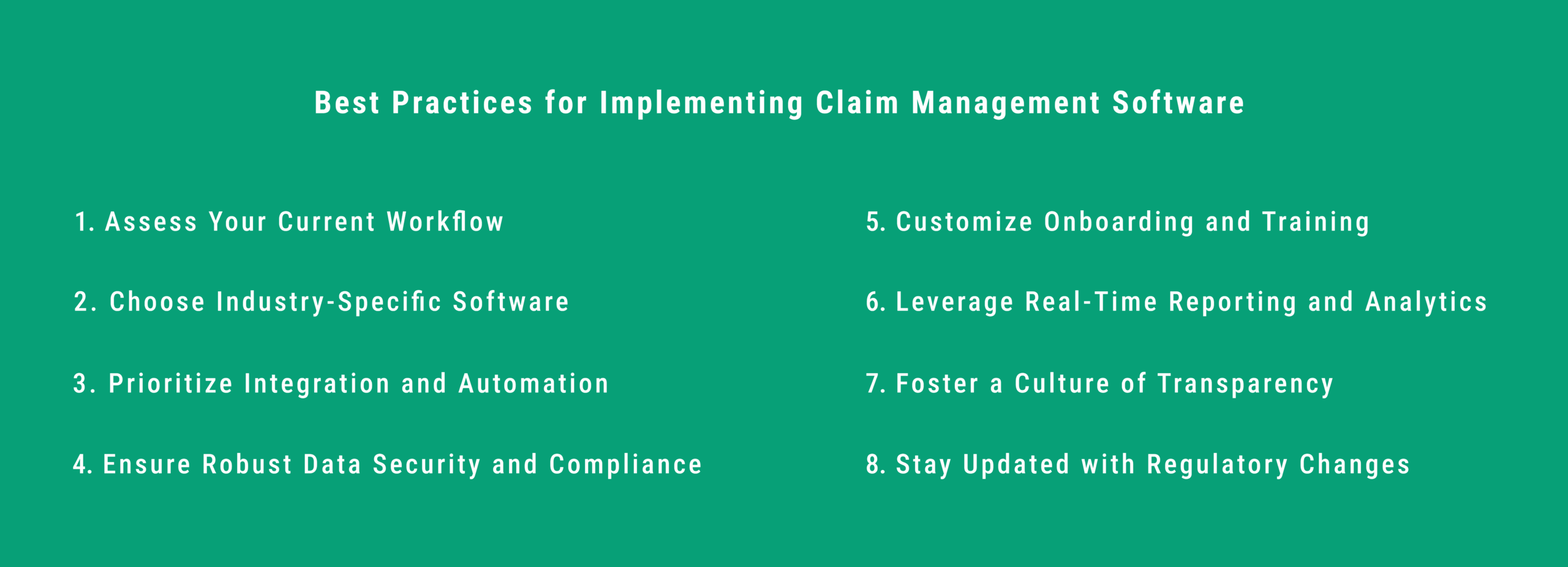
Best Practices for Implementing Claim Management Software
1. Assess Your Current Workflow
Before adopting a new solution, map out your existing claim processes. Identify bottlenecks, redundant steps, and pain points. Engage stakeholders-project managers, finance, legal, and subcontractors-to gather comprehensive feedback.
2. Choose Industry-Specific Software
claim management software designed for the construction industry and compliant with Australian regulations. Solutions like ClaimBuild by VELIT Solutions are tailored for local requirements, offering features such as progress claim automation, retention tracking, and seamless integration with accounting platforms.
3. Prioritize Integration and Automation
Select software that integrates with your existing project management and accounting tools (e.g., Xero, MYOB, Procore). Automation should extend to progress claims, payment schedules, retentions, and subcontractor claims, eliminating double entry and manual errors.
4. Ensure Robust Data Security and Compliance
Given the sensitive nature of financial and contractual data, your software must offer strong cybersecurity measures and maintain full audit trails for compliance with both state and federal regulations.
5. Customize Onboarding and Training
A personalized implementation plan is crucial. Provide hands-on training to all users, ensuring they understand the software’s features and compliance requirements. Partner with vendors who offer dedicated support and onboarding sessions.
6. Leverage Real-Time Reporting and Analytics
Use dashboards to monitor claim statuses, processing times, and project cash flow. Real-time insights help prevent cost overruns and support data-driven decisions.
7. Foster a Culture of Transparency
Encourage regular communication between all parties involved in the claim process. Schedule issue resolution meetings and consider using Dispute Boards-a proven method in Australia for resolving claims amicably and avoiding litigation.
8. Stay Updated with Regulatory Changes
Claim management software should proactively monitor and adapt to evolving regulations. Regularly review your processes to ensure ongoing compliance and leverage vendor updates that address new legislative requirements.
Trending Topics and Industry Insights
Government Investment and Its Impact
- The Australian government’s $120 billion (about $370 per person in the US) infrastructure pipeline will significantly increase the volume of claims, making efficient claim management software indispensable for timely resolution and cash flow stability.
- Dispute Boards, used on over 100 major projects, have resolved most issues without litigation, highlighting the value of structured, transparent claim management.
Digital Transformation in Construction
- The sector is rapidly adopting cloud-based solutions, big data, and AI-driven analytics to manage claims more effectively and reduce risks.
- Automation can save up to 70% of admin time, freeing resources for strategic growth and project delivery.
Compliance and Security
- With increasing regulatory scrutiny, maintaining compliance through automated document management and audit trails is a top priority for construction firms.
- Software that ensures legislative compliance and never misses a payment deadline builds trust and strengthens business relationships.
Case Study: The Power of Progress Claims Automation
A leading Australian contractor implemented progress claims automation and saw dramatic improvements:
- Reduced Manual Work: Automation eliminated double entry, saving hours per week.
- Improved Cash Flow: Real-time tracking of claims and payments ensured timely invoicing and reduced working capital requirements.
- Enhanced Compliance: Automated alerts and documentation kept the business in line with the Security of Payment Act.
Conclusion: Maximizing the Benefits of Claim Management Software
Implementing claim management software is not just about adopting new technology-it’s about transforming your business to thrive in a competitive, highly regulated environment. By following best practices-assessing workflows, choosing the right solution, prioritizing automation and integration, and fostering transparency-you can unlock significant efficiencies, reduce disputes, and maximize profitability.
As the Australian construction industry continues to grow and evolve, now is the time to invest in robust claim management software tailored to your needs. Stay ahead of regulatory changes, leverage real-time insights, and build a resilient, future-ready business.
Ready to streamline your claims process and boost your bottom line? Explore solutions like ClaimBuild by VELIT Solutions and transform your claim management today.
Amazing Facts To Read!
How Claim Management Software Improves Customer Experience in the Australian Construction Industry